Somalia


Assessments
February 2025
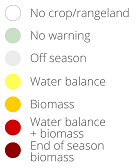
Below-average rainfall during the 2024 Deyr season (October–December) negatively impacted crop and livestock production. Further, ICPAC forecast predicts a below average 2025 Gu season (April–June), a situation that will further exacerbate the situation. According to IPC recent analysis, high levels of acute food insecurity exist in the country. Nearly 3.4 million people are classified in IPC phase 3+ (crisis), comprising about 442,000 people in Phase 4 (emergency) and 2.9 million in Phase 3 (crisis) for the period February to March 2025. This is a 15% decrease in population with acute food insecurity as compared to 2023, but the situation is expected to worse again if the forecast for below average Gu 2025 rainfall materializes.
.
.
Hotspots Time Series
Assessment_graph
Country Summary
Statistics
Date
Agricultural cover
Number of administrative units classified as Warning (%)
Warnings and indicator graphs
Date
Cover
Date
Cover
WI_graph1
Date
Cover
WI_graph2
Date
Cover
Indicator
WI_graph3
Indicator temporal profile (ASAP units level 1)
Date
Cover
Indicator
Area
ASAP1 Units
Indicator maps
Main indicators at dekad
Last 6 dekads for indicator
Date
Indicator
Date
Indicator

Date
Indicator
Date
Indicator
Date
Indicator

Date
Indicator
Ancillary Information
Overview maps
Phenology
Layer
Season progress
Dekad
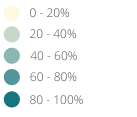
Agricultural area
Cover
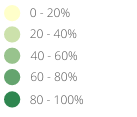
Warning frequency map
Cover
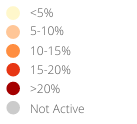
ASAP units
Crop calendar and Production
Selection of FAO crop calendars matching with ASAP phenology
CCP_graph1
Agriculture statistics: ten crops with largest area
CCP_graph2
Agriculture statistics: ten crops with largest production
CCP_graph3
Share of national cereal production by subnational units
CCP_graph4